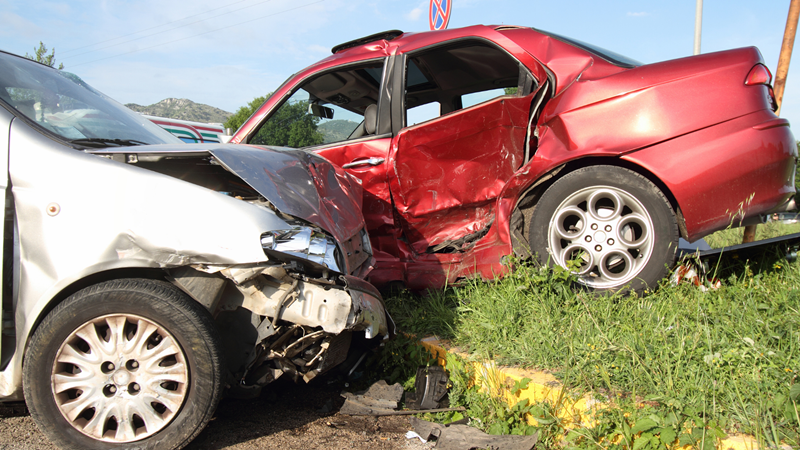
In New Jersey, you can still recover money after a crash even if you were partly to blame, as long as your share of the fault is not greater than 50 percent. Your compensation is then reduced by your own percentage of fault. This rule decides the outcome of many injury claims, which is exactly why insurers fight so hard over it. An experienced attorney can help injured people in Union County protect the compensation that shared-blame arguments are designed to reduce.
New Jersey follows a modified comparative negligence system under N.J.S.A. 2A:15-5.1 and 2A:15-5.2. A jury assigns each party a percentage of fault, and the total adds up to 100 percent. You recover only if your negligence is not greater than the combined negligence of the other parties, which creates what lawyers call the 51 percent bar. At exactly 50 percent fault, you still recover, though your award is cut in half. At 51 percent or more, you recover nothing. Suppose a jury values your damages at $100,000 and finds you 30 percent at fault for a lane change. Your recovery is reduced by your share, leaving $70,000. Push that same finding to 51 percent, and the recovery drops to zero, which is why the gap between 50 and 51 is the whole ballgame.
Because a single percentage point can erase a claim, the at-fault driver's insurer has one goal: move your share of blame above 50 percent. Adjusters are trained to ask questions that nudge you toward admitting partial fault, often during a recorded statement requested soon after the crash.
You are not required to give that statement without your own representation. In a rear-end collision, the law generally presumes the trailing driver is at fault, so the insurer may instead claim you stopped short, that a brake light was out, or that you changed lanes without signaling.
Each of those arguments exists to move a few points of fault onto you, because the carrier knows that crossing the 50 percent line ends its exposure entirely. The defense carries the burden of proving your comparative negligence, but it will build that argument from anything you say.
When several drivers contribute to a crash, N.J.S.A. 2A:15-5.3 controls how you collect. A defendant found 60 percent or more at fault can be required to pay the entire award, while a defendant found less than 60 percent at fault pays only its own share. Picture a chain-reaction crash on Interstate 78 in northern Union County involving three vehicles. If one driver is found 65 percent responsible, you may collect your full award from that driver's insurer, even if the others cannot pay. Sorting out those percentages early shapes which insurers you pursue and for how much, and it can decide whether you collect your full award or only a fraction of it.
Fault is decided by evidence, not by an adjuster's first phone call. The police crash report, known as the NJTR-1, records the responding officer's observations and any citations. Independent witnesses, the vehicles' event data recorders, and clear photographs of the scene and damage carry more weight than either driver's account. Preserving that proof quickly keeps the fault percentage honest before memories fade and vehicles are repaired.
The Budanitsky firm investigates the crash independently rather than letting the insurer's version stand. Attorney Sander Budanitsky has represented injured New Jersey clients since 1996 and has tried cases in the Union County vicinage, where these disputes are decided.
Prompt action while the evidence is fresh protects both your share of fault and your two-year window to file, so reaching out soon after a crash gives your claim its best footing. Whether you can also recover for pain and suffering turns on a separate question, the verbal threshold, which your tort option controls.
The consultation is free, and you owe no fee unless there is a recovery. The Law Offices of Sander Budanitsky, L.L.C., is ready to review your case.
Yes, as long as your fault is not greater than 50 percent. Your award is reduced by your percentage of fault, and at 51 percent or more, you cannot recover.
A jury assigns each party a percentage based on the evidence. An adjuster's opinion is one side's position, not a legal finding.
Reviewed by Sander Budanitsky, Esq., admitted to the New Jersey Bar in 1996.
Last reviewed: July 2026
This article is for general information only and is not legal advice. Reading it does not create an attorney-client relationship. For advice about your specific situation, consult a licensed New Jersey attorney.

After a crash, one of the first worries is where to go for care and...
Ocean County's roads swell with shore traffic, commuters, and seasonal visitors, and Toms River sits...
A drunk driving crash can leave you facing painful injuries, mounting bills, and uncertainty about...
A car accident in Elizabeth can leave you with a great deal to handle at...
The Law Offices of Sander Budanitsky, L.L.C. welcomes calls from potential clients and from attorneys looking to refer or co-counsel a matter. Whether it is an injury claim, a civil dispute, a criminal charge, or an immigration question, the first conversation is free and there is no obligation to hire the firm afterward.
Call the Roselle, New Jersey office at (908) 241-3445 or the Philadelphia, Pennsylvania office at (215) 545-2300. You can also send the details through the contact form and someone from the office will get back to you. Calls are answered 24 hours a day, 7 days a week.
