
If you were hurt on or by an NJ Transit bus or train, you are working against a deadline most injury victims never face.
Since NJ Transit is a public entity, you might only have 90 days instead of the two years that apply for a typical crash.
NJ Transit is a public entity, so a claim against it falls under the New Jersey Tort Claims Act, codified at N.J.S.A. 59.
That statute generally shields public entities from liability except where the law specifically allows a claim, such as a dangerous condition on its property or the negligent operation of a public vehicle.
A fall caused by a poorly maintained station stairway and a crash caused by a bus driver running a light are both the kinds of claims the Act can allow. It also limits recovery in a way private cases do not: under N.J.S.A. 59:9-3.1 a public entity pays only its own percentage share of fault.
These rules make a transit claim a different animal from a routine car accident.
The single most important rule is the notice deadline. Under N.J.S.A. 59:8-8 you must serve a written Notice of Claim on the public entity within 90 days of the accident and then wait six months before you can file suit. Miss that 90-day window and your claim can be barred entirely, no matter how badly you were hurt.
A late notice is allowed only on a showing of extraordinary circumstances under N.J.S.A. 59:8-9, and courts read that exception narrowly. This is exactly why the strict two-year deadline that governs most crashes can lull a transit victim into waiting too long.
There is better news on the right to sue for pain and suffering.
A bus is not an automobile that requires Personal Injury Protection, so passengers on an NJ Transit bus are often not bound by the verbal threshold that limits many drivers. That means an injured passenger can frequently pursue noneconomic damages without first proving the injury fits one of the six statutory categories.
Your own Personal Injury Protection still pays your medical bills first in most situations, so the practical question is usually how to combine PIP with a Tort Claims Act claim against the public entity. The interaction between the Tort Claims Act and the no-fault rules is technical, which is one more reason to get advice quickly.
A pedestrian struck by a transit bus, a passenger thrown during a sudden stop, and a driver hit at an intersection can each face a different mix of these rules, and the right path depends on the specific facts.
Transit cases reward fast action on evidence. NJ Transit creates an incident report, and onboard or station video can be decisive, but that footage is often kept only for a limited time before it is overwritten.
Gathering witness information, preserving your own records of the trip, and documenting your injuries and treatment all strengthen the claim. Keep your bus or rail fare record, the route and run number if you have it, and the date and time, since those details help NJ Transit locate the right incident report and the matching video.
The earlier this work begins, the more of the record survives. Sending a preservation demand to NJ Transit quickly is often the only way to keep onboard video from being recorded over.
The Law Offices of Sander Budanitsky, L.L.C. helps injured riders and pedestrians in Union County meet these strict rules before they run out.
Attorney Sander Budanitsky has represented injured New Jersey clients since 1996 and understands how public-entity claims differ from ordinary ones.
Because the notice deadline can be as short as 90 days, waiting is the one thing you cannot afford, so reach out to The Law Offices of Sander Budanitsky, L.L.C. as soon as you can. The consultation is free with no fee unless there is a recovery.
How long do I have to file a claim against NJ Transit?
You generally must serve a written Notice of Claim within 90 days of the accident under the Tort Claims Act, then wait six months before filing suit. Late notice is allowed only in extraordinary circumstances.
Can a bus passenger sue for pain and suffering in New Jersey?
Often yes. Because a bus is not an automobile requiring PIP, passengers are frequently not bound by the verbal threshold and may pursue pain-and-suffering damages.
Reviewed by Sander Budanitsky, Esq., admitted to the New Jersey Bar in 1996.
Last reviewed: June 2026
This article is for general information only and is not legal advice. Reading it does not create an attorney-client relationship. For advice about your specific situation, consult a licensed New Jersey attorney.

A car accident in Elizabeth can leave you with a great deal to handle at...
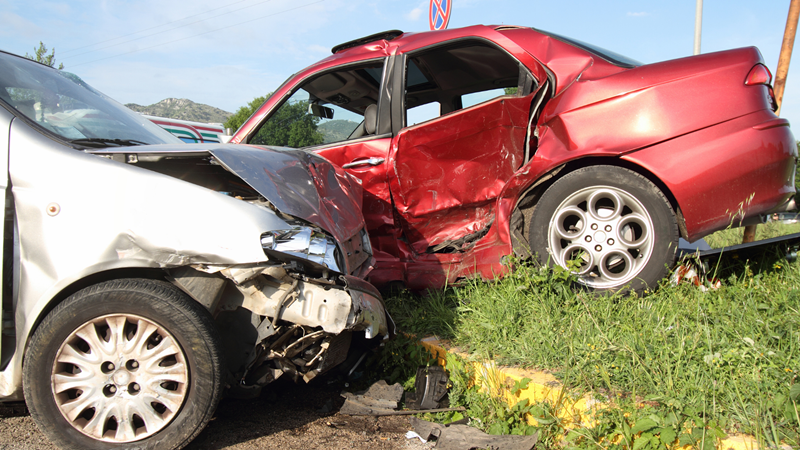
In New Jersey, you can still recover money after a crash even if you were...

Most New Jersey car accident lawsuits must be filed within two years of the crash...
After a New Jersey crash, your own auto policy pays your medical bills first through...
The Law Offices of Sander Budanitsky, L.L.C. welcomes calls from potential clients and from attorneys looking to refer or co-counsel a matter. Whether it is an injury claim, a civil dispute, a criminal charge, or an immigration question, the first conversation is free and there is no obligation to hire the firm afterward.
Call the Roselle, New Jersey office at (908) 241-3445 or the Philadelphia, Pennsylvania office at (215) 545-2300. You can also send the details through the contact form and someone from the office will get back to you. Calls are answered 24 hours a day, 7 days a week.
