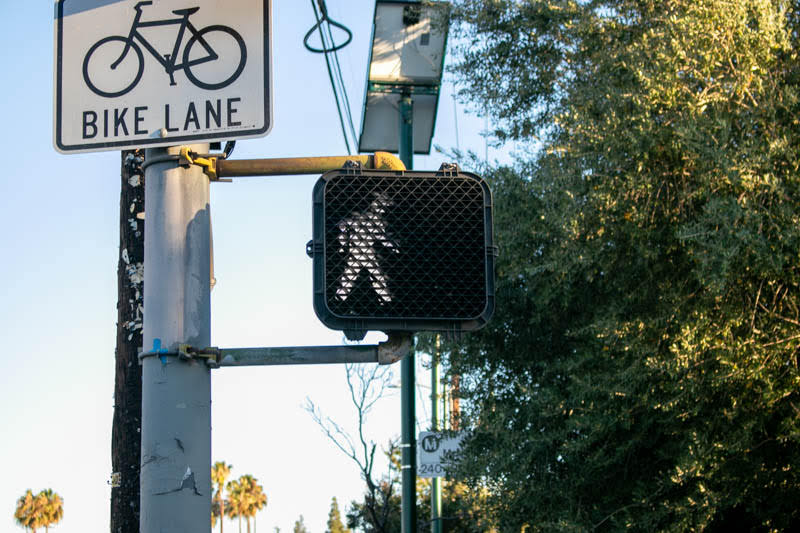
When a driver strikes a person on foot, who pays for the harm? In most Union County pedestrian cases, the at-fault driver is responsible, and the injured pedestrian is generally not bound by the verbal threshold that limits many drivers.
That second point often surprises people and can make a real difference in a claim.
Pedestrian crashes cluster on the busy local arterials that carry foot traffic and turning vehicles together.
Morris Avenue in Union Township, Oakland Avenue, and the Stuyvesant Avenue corridor near the Irvington line are signal-dense streets where crosswalk and left-turn conflicts are common. A driver rushing a turn or rolling through a crosswalk has little room for error when someone is crossing.
Pedestrians hurt on these roads are often treated at Robert Wood Johnson University Hospital in Rahway or Overlook Medical Center in Summit, depending on where the crash happened, while the most severe injuries are taken to the Level I trauma center at University Hospital in Newark, since Union County has no trauma center of its own.
The pattern is consistent: a person on foot has no protection when a driver turns without looking, so even a low-speed impact can cause lasting harm.
New Jersey's verbal threshold under N.J.S.A. 39:6A-8 limits when many drivers can sue for pain and suffering, but whether it reaches a pedestrian depends on the pedestrian's own insurance status, not simply on the fact that they were walking rather than driving.
The threshold is tied to a person's own PIP coverage and, specifically, whether that person (or the auto policy they're covered under, such as a resident relative's) selected the limitation-on-lawsuit option. A pedestrian who doesn't own a car and isn't a resident relative of someone with that option generally isn't required to carry PIP and typically isn't bound by the threshold, meaning they can usually pursue noneconomic damages for pain and the lasting effects of an injury without proving the case fits one of six statutory injury categories.
But a pedestrian who owns their own vehicle and selected the limitation-on-lawsuit option on that policy can still be bound by the threshold even though they were struck while walking, because the threshold attaches to the person's own coverage election, not to the vehicle involved in the crash. This is a detail worth confirming early, since assuming every pedestrian automatically escapes the threshold can lead to a miscalculated claim.
Most pedestrian cases turn on right of way and whether the driver failed to yield. A driver must yield to a pedestrian in a marked crosswalk, and crashes at mid-block crossings raise their own questions about who had the duty to stop.
Evidence matters here as much as anywhere: the NJTR-1 crash report, independent witnesses, signal-timing data, and any sign the driver was speeding or distracted all help fix responsibility. A driver who claims the pedestrian "came out of nowhere" is often a driver who was not watching the road.
Nearby business or doorbell cameras frequently capture the seconds before impact, and locating that footage early can settle the question of who had the light.
New Jersey's modified comparative negligence rule under N.J.S.A. 2A:15-5.1 still applies to pedestrians, so a person who was crossing outside a crosswalk may be assigned a share of fault. That does not necessarily end the claim.
As long as the pedestrian's share is not greater than 50 percent, recovery is reduced by that percentage rather than barred, and a speeding or distracted driver often carries the larger share regardless of where the person crossed.
The roads remain dangerous statewide, with 299 drivers among the people killed in New Jersey traffic in 2025, according to the New Jersey Office of the Attorney General, a reminder of how much weight rides on driver attention. When the at-fault driver flees or has no insurance, a pedestrian's own auto policy can still provide uninsured motorist coverage, even though the person was on foot rather than driving.
At The Law Offices of Sander Budanitsky, L.L.C., we investigate a pedestrian crash with the driver's likely defenses already in mind, building the right-of-way evidence before it fades.
Attorney Sander Budanitsky has represented injured New Jersey clients since 1996 and knows how insurers try to shift blame onto people on foot. The consultation is free, you owe no fee unless there is a recovery, and the two-year filing deadline makes early action wise.
Reach out to The Law Offices of Sander Budanitsky, L.L.C., at (908) 241-3445 to review what happened.
Can a pedestrian sue for pain and suffering in New Jersey?
Yes. Pedestrians are generally not bound by the verbal threshold because they are not required to carry PIP, so they can usually pursue pain-and-suffering damages without meeting the six injury categories.
What if I was crossing outside a crosswalk when I was hit?
You may be assigned a share of fault, but you can still recover if your share is not greater than 50 percent. A speeding or distracted driver often bears the larger share.
Reviewed by Sander Budanitsky, Esq., admitted to the New Jersey Bar in 1996.
Last reviewed: June 2026
This article is for general information only and is not legal advice. Reading it does not create an attorney-client relationship. For advice about your specific situation, consult a licensed New Jersey attorney.
A car accident in Elizabeth can leave you with a great deal to handle at...
After a New Jersey crash, your own auto policy pays your medical bills first through...
If you were hurt on or by an NJ Transit bus or train, you are...

After a crash, one of the first worries is where to go for care and...
The Law Offices of Sander Budanitsky, L.L.C. welcomes calls from potential clients and from attorneys looking to refer or co-counsel a matter. Whether it is an injury claim, a civil dispute, a criminal charge, or an immigration question, the first conversation is free and there is no obligation to hire the firm afterward.
Call the Roselle, New Jersey office at (908) 241-3445 or the Philadelphia, Pennsylvania office at (215) 545-2300. You can also send the details through the contact form and someone from the office will get back to you. Calls are answered 24 hours a day, 7 days a week.
